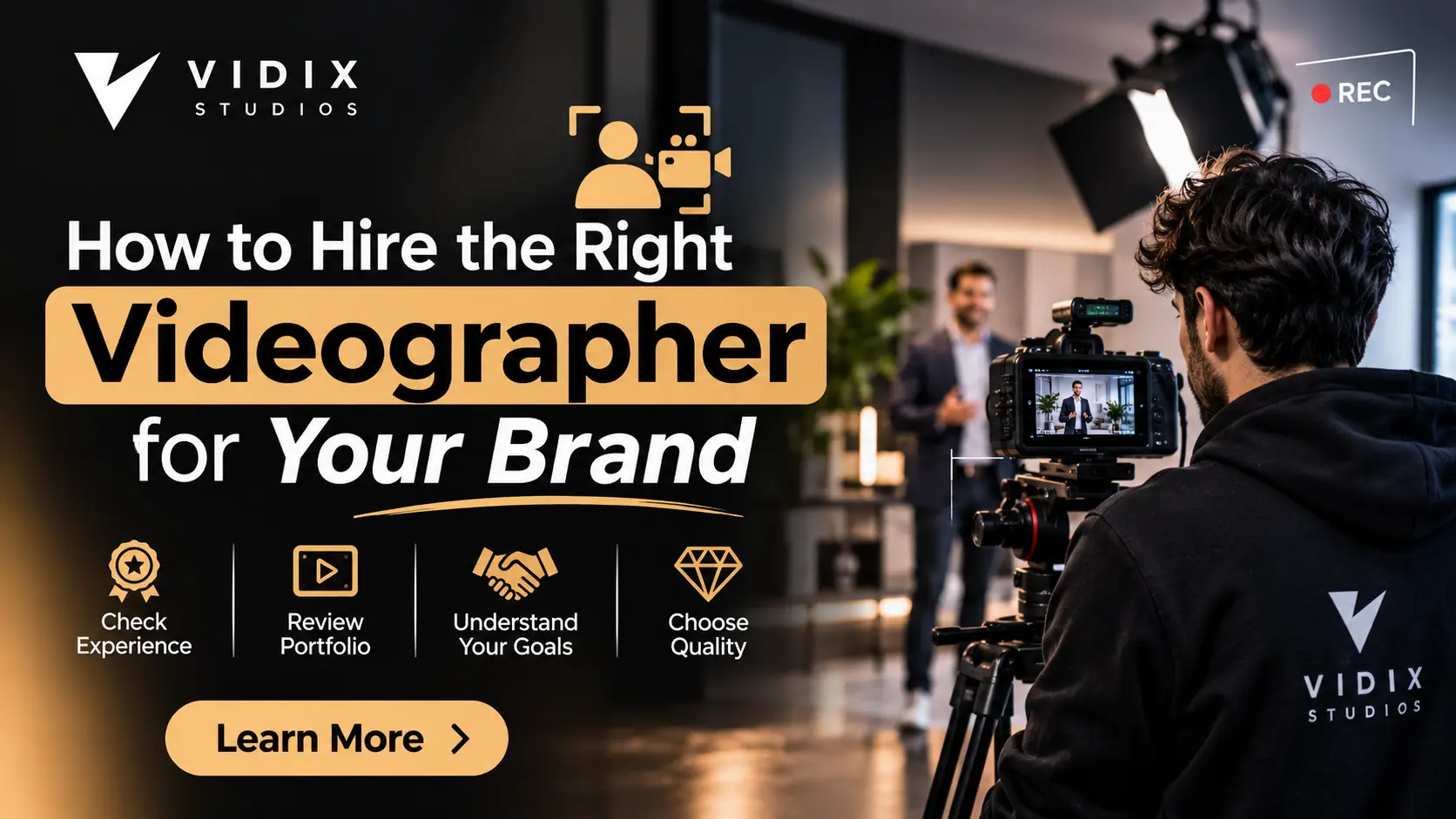
Most business owners know they need video. Far fewer know who to hire to make it. Do you need a camera operator, an editor, or someone who does both? Should you pick a freelancer, a local crew, or a team? And where does AI fit in?
If those questions sound familiar, you’re in the right place. This guide explains what a videographer actually does, what separates a good one from an average one, and how to choose the right fit for your business without wasting budget.
What Does a Videographer Actually Do?
A videographer captures moving images for a purpose. That purpose might be a brand story, a product demo, a real estate walkthrough, a gym promo, or a testimonial from a happy customer.
Unlike a film director, a videographer usually works faster and leaner. They often handle planning, lighting, sound, filming, and sometimes the edit too. That’s why you’ll see the title videographer/editor so often. Many professionals shoot the footage and then shape it into the final video.
A typical day on a shoot includes:
- Scouting the location and checking the light
- Setting up cameras, microphones, and lighting
- Directing people on camera so they look natural
- Capturing extra b-roll (supporting shots) for the edit
- Backing up footage safely before leaving
The shoot is only half the job. Raw footage doesn’t generate leads. A polished, well-edited video does.
Videographer vs. Photographer vs. Video Editor
People mix these roles up all the time, so here’s the quick version:
- Photographer: captures still images.
- Videographer: captures moving footage, audio, and sometimes handles the edit.
- Video editor: works with footage after the shoot, cutting, color grading, adding sound, graphics, and effects.
The best results come when filming and editing are planned together. A good videographer shoots with the edit in mind. They know which shots the editor will need, how long each clip should run, and where the story will cut. That’s why a combined videographer/editor workflow often saves time and money.
Why Hi Def Videographer Skills Matter in 2026
Viewers are used to sharp, clean video on every screen. Grainy footage, shaky shots, or muffled audio make a business look careless, even if the product is excellent.
A true hi def videographer brings more than a good camera. They bring:
- Crisp resolution: footage shot in 4K or at least 1080p, so it looks sharp on phones, laptops, and TVs.
- Clean audio: lavalier or shotgun microphones instead of built-in camera audio. Viewers forgive soft visuals long before they forgive bad sound.
- Smart lighting: soft, even light that flatters people and products.
- Stable shots: gimbals, tripods, and sliders instead of handheld wobble.
- Color consistency: footage that matches from shot to shot, so the final edit feels professional.
Hi def quality isn’t about showing off. It’s about trust. When your video looks professional, your business feels professional.
Where AI Fits In: Videographer AI Tools
You’ll see the phrase videographer AI more and more, and it deserves a straight answer. AI isn’t replacing skilled videographers. It’s making good ones faster.
Here’s where AI genuinely helps today:
- Rough cuts and transcripts: AI can transcribe footage and assemble a first draft quickly.
- Auto-captions: accurate subtitles for social media videos, where most people watch on mute.
- Noise reduction: cleaning up background hum and echo.
- Color matching and stabilization: fixing small issues that used to take hours.
- Repurposing: turning one long video into several short clips.
Here’s what AI can’t do. Walking into a dental clinic and making a nervous patient comfortable on camera is beyond it. Deciding which moment tells your brand’s story takes a human eye, and so does sensing when a pause is working. Creative judgment still belongs to people. If you want to see which tools are worth using, our guide to the best AI video editing tools breaks it down.The smart move is to hire a professional who uses AI as an assistant, not as a substitute for skill.
What Makes Great Videographer Videos Convert?
Beautiful footage isn’t enough. Great videographer videos have a job, and they do it well. Before you hire anyone, get clear on what your video should accomplish.
1. A clear goal. Is the video meant to generate leads, build trust, explain a service, or sell a product? One video, one main goal.
2. A strong hook. The first three seconds decide whether someone keeps watching. Open with a result, a question, or a striking visual, not a slow logo animation.
3. A simple story. Problem, solution, proof, next step. Keep it human and keep it short.
4. Proper formatting. A horizontal video for YouTube and your website, vertical cuts for Reels, TikTok, and Shorts. One shoot can feed all of them if it’s planned properly.
5. A clear call to action. Tell viewers exactly what to do next: book a call, request a quote, visit a page.
This is the difference between “nice video” and “video that brings customers.”
How Much Does a Videographer Cost?
Prices vary widely, and anyone who quotes you a single number without asking questions is guessing. Costs depend on:
- Length and complexity of the final video
- Number of shoot days and locations
- Crew size, lighting, and equipment
- Editing level (simple cuts vs. motion graphics and color grading)
- Usage rights and number of revisions
As a rough guide in the USA, small business projects can start in the hundreds of dollars for simple shoots, while full commercial productions can reach several thousand. The better question isn’t “what’s the cheapest option?” but “what return will this video bring?” One strong video can work for you across your website, ads, and social channels for a year or more.
Freelance Videographer, Local Crew, or Agency?
Each option has a place.
Freelancers can be great for one-off shoots, but availability, backup gear, and consistency can be risky. If your freelancer is sick or busy, your campaign waits.
Local crews are useful when you need filming in a specific city. Make sure they also have strong editing skills, or you’ll end up hiring two vendors.
A full-service team gives you planning, filming, editing, and revisions under one roof. That means one point of contact and consistent quality across every video. If you want a deeper look at how teams compare, read our guide on how to choose the best video editing agency in USA.
At vidix studios, the focus is on turning footage into videos that look sharp, sound clean, and move viewers to act. Many of our clients are dental clinics, fitness brands, and real estate teams who need a steady stream of polished content, not a single lucky video.
7 Questions to Ask Before You Hire a Videographer
Use this checklist in your first conversation:
- Can I see recent work in my industry? A strong portfolio matters more than a long bio.
- Do you handle editing, or only filming? Clarify who owns the final cut.
- What gear do you shoot with? Look for hi def or 4K cameras and proper audio equipment.
- How many revisions are included? Avoid surprise charges later.
- What is your turnaround time? Fast is good. Rushed is not.
- Who owns the footage and the final video? Get usage rights in writing.
- How do you use AI in your workflow? The right answer is “to speed up routine tasks, not to replace creative decisions.”
If a videographer answers these clearly and confidently, you’re probably in good hands.
Videographer Mistakes That Cost Businesses Leads
Even good brands make avoidable errors. Watch out for:
- Hiring on price alone. A very low quote often means weak audio, poor lighting, or no editing.
- Skipping the plan. Without a script or shot list, shoot days run long and the edit suffers.
- Making videos too long. Most social videos perform best under 60 seconds.
- Forgetting captions. Silent viewers are still potential customers.
- No distribution plan. A great video that nobody sees generates nothing. Plan where it will live before you film it.
Building a Long-Term Video Strategy
The brands that win with video don’t treat it as a one-time project. They build a repeatable system: shoot in batches, edit for multiple platforms, and publish consistently. If you’re running a business and want a partner who can support this ongoing work, see how we help agency owners scale their video output without hiring a full in-house team.
For more inspiration and examples, explore our media production articles and our video editing guides. You can also browse everything on our blog page and review our video production services. If you’re ready to start, our contact page is the fastest way to reach us.
Frequently Asked Questions (FAQs)
1. What is a videographer?
A videographer is a professional who films video for businesses, events, and brands. Many also handle editing, sound, and basic post-production, which is why you’ll often see the title videographer/editor.
2. What’s the difference between a videographer and a video editor?
A videographer captures the footage. A video editor shapes that footage into the final video with cuts, color, music, captions, and graphics. Some professionals do both.
3. What does a hi def videographer do differently?
A hi def videographer shoots in high resolution (1080p or 4K) with professional lighting, stabilization, and audio so your final video looks sharp and trustworthy on every screen.
4. Can AI replace a videographer?
No. AI tools can speed up tasks like captions, transcripts, and rough cuts, but they can’t replace creative direction, on-camera communication, or storytelling. The best results come from a skilled videographer who uses AI wisely.
5. How much do videographer videos cost?
It depends on length, crew, locations, and editing. Simple business videos can start at a few hundred dollars, while larger commercial productions cost more. Always ask for a detailed quote.
6. How long does it take to get a finished video?
A short social video can be ready in a few days. Larger projects with multiple shoot days and revisions usually take two to four weeks.
7. Should I hire a freelancer or a team?
Freelancers suit small, one-time projects. A team is better when you need consistent quality, faster turnaround, and ongoing content across platforms.
8. What should I prepare before meeting a videographer?
Know your goal, your audience, where the video will be published, your timeline, and your budget. A clear brief leads to a better video.
Conclusion
Hiring a videographer isn’t just about finding someone with a nice camera. It’s about finding a partner who understands your goals, shoots with the edit in mind, delivers hi def quality, and uses modern tools like AI to move faster without cutting corners.
Start with a clear objective, check portfolios, ask the right questions, and choose a team that can grow with your content needs. When your videographer videos look sharp, sound clean, and tell a clear story, they build trust and bring in leads.
Ready to turn your footage into videos that actually bring in customers? Reach out to the team at video editing agency in USA Vidix Studios and let’s plan your next video together.