Video has become the most powerful way for brands to grab attention, build trust, and drive sales. Short-form clips, YouTube content, product demos, testimonials, and ad creatives all need to look sharp and go live consistently. The challenge is that quality editing takes time, specialized skills, and expensive tools. That is why more companies now choose to outsource video editing services instead of building and managing an in-house team. At vidix studios, we work with brands that want polished, platform-ready videos without the overhead, and this guide explains why outsourcing works and what it really costs.
What Does It Mean to Outsource Video Editing Services?
Outsourcing means handing your raw footage to an external editor, freelancer, or agency who turns it into a finished video. They take care of cutting, pacing, color grading, sound design, captions, motion graphics, and final exports in the right formats for each platform. You share the footage and your brief, and you receive ready-to-publish videos.
There are three common ways to outsource:
- Freelancers: Affordable and flexible, but quality, availability, and reliability can vary.
- Editing agencies: A team of specialists with defined workflows, quality checks, and capacity for volume.
- Subscription or retainer editing: A fixed monthly fee for a set number of videos, ideal for brands posting regularly.
Why In-House Editing Often Falls Short
Many businesses start by asking a marketing team member to handle editing. It works at first, but problems appear quickly. Editing is slow, software needs powerful hardware, and one person rarely masters storytelling, animation, color, and audio at once. When that person is busy or leaves, production stops. Hiring a full-time editor solves some of this, yet it adds salary, benefits, training, and software costs to your budget even in months when you have little to edit.
Top Benefits of Outsourcing Video Editing
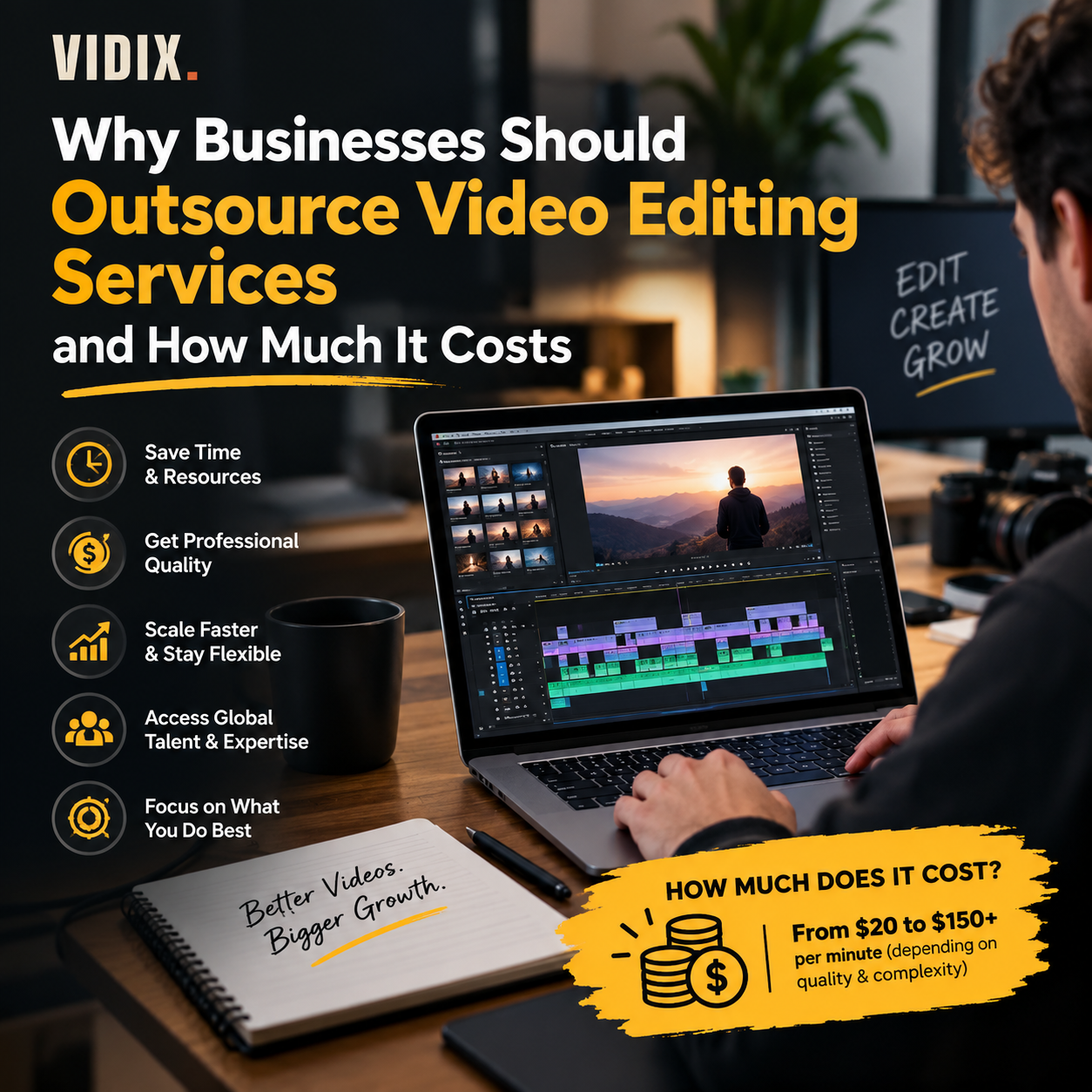
1. Lower and more flexible costs. You avoid salaries, benefits, equipment, and software licenses. You pay only for the videos you actually need.
2. Access to expert talent. A professional team includes editors, colorists, sound designers, and motion graphics artists. Together they deliver a level of quality that a single generalist can rarely match.
3. Faster turnaround. Agencies have structured workflows and multiple editors, so deadlines are easier to meet, even for campaigns with tight launch dates.
4. Easy scalability. Need 4 videos this month and 40 next month? Outsourcing lets you scale up or down instantly without hiring or layoffs.
5. Consistent brand quality. A good partner follows your style guide, fonts, colors, and tone so every video feels like it belongs to the same brand.
6. Better content performance. Experienced editors understand hooks, retention, and pacing. Strong editing keeps viewers watching longer, which helps with reach, engagement, and conversions.
7. More time for your core business. Instead of learning editing software or managing freelancers, you can focus on strategy, sales, and customers.
8. Access to the latest tools and trends. Agencies invest in professional software, plugins, and training, and they stay on top of changing platform trends like new aspect ratios, caption styles, and short-form formats.
A reliable video editing agency in USA also understands American audience preferences, platform best practices, and business time zones, which makes communication and feedback much smoother.
How Much Does Outsourced Video Editing Cost?
Pricing depends on video length, complexity, and who you hire. These are approximate market ranges:
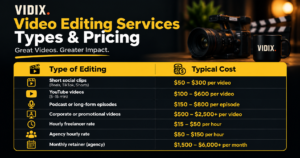
Freelancer vs. Agency vs. In-House: Cost Comparison
Freelancer: The cheapest option per video, but you carry the risk of missed deadlines, limited skill range, and inconsistent quality. You also spend time managing and briefing them.
Agency: Costs more per video, but you get a full team, backup capacity, quality control, and project management. For businesses that depend on regular output, this reliability often saves money in the long run.
In-house editor: A full-time editor in the US can cost roughly $55,000–$75,000 per year before benefits, software, and hardware. This only makes sense if you produce a very high volume of video every single week.
What Affects the Price?
- Video length and raw footage volume: More footage means more hours spent reviewing and cutting.
- Complexity: Motion graphics, VFX, animation, and advanced color grading raise the price.
- Number of revisions: Packages usually include a set number, and extra rounds may cost more.
- Turnaround time: Rush delivery typically comes with a premium.
- Editor experience: Senior editors and specialized agencies charge more, but deliver stronger results.
- Add-ons: Subtitles, thumbnails, music licensing, and multi-platform resizing may be billed separately.
Frequently Asked Questions
Is it cheaper to outsource video editing or hire in-house?
For most small and mid-sized businesses, outsourcing is cheaper because you avoid salaries, benefits, and software costs and pay only for the work you need.
How long does outsourced video editing take?
Short social videos are often ready in 24 to 72 hours, while longer or more complex projects can take 5 to 10 business days.
Can I request revisions?
Yes. Most agencies include a set number of revisions in the package, and additional rounds may carry a small fee.
Will my raw footage stay secure?
Reputable agencies use secure file transfer and confidentiality agreements. Always confirm this before sharing files.
Do I need to give detailed instructions?
A clear brief helps, but you do not need to be technical. Share your goals, reference videos, brand guidelines, and preferred style, and a good editor will handle the rest.
Can an agency edit videos for different platforms?
Yes. Professional teams export the same content in the right formats and lengths for YouTube, Instagram, TikTok, LinkedIn, and more.
What types of businesses benefit most from outsourcing?
Marketing agencies, YouTubers, e-commerce brands, coaches, SaaS companies, podcasters, and real estate businesses all benefit because they need regular video content without a dedicated editing department.
What should I look for in an editing partner?
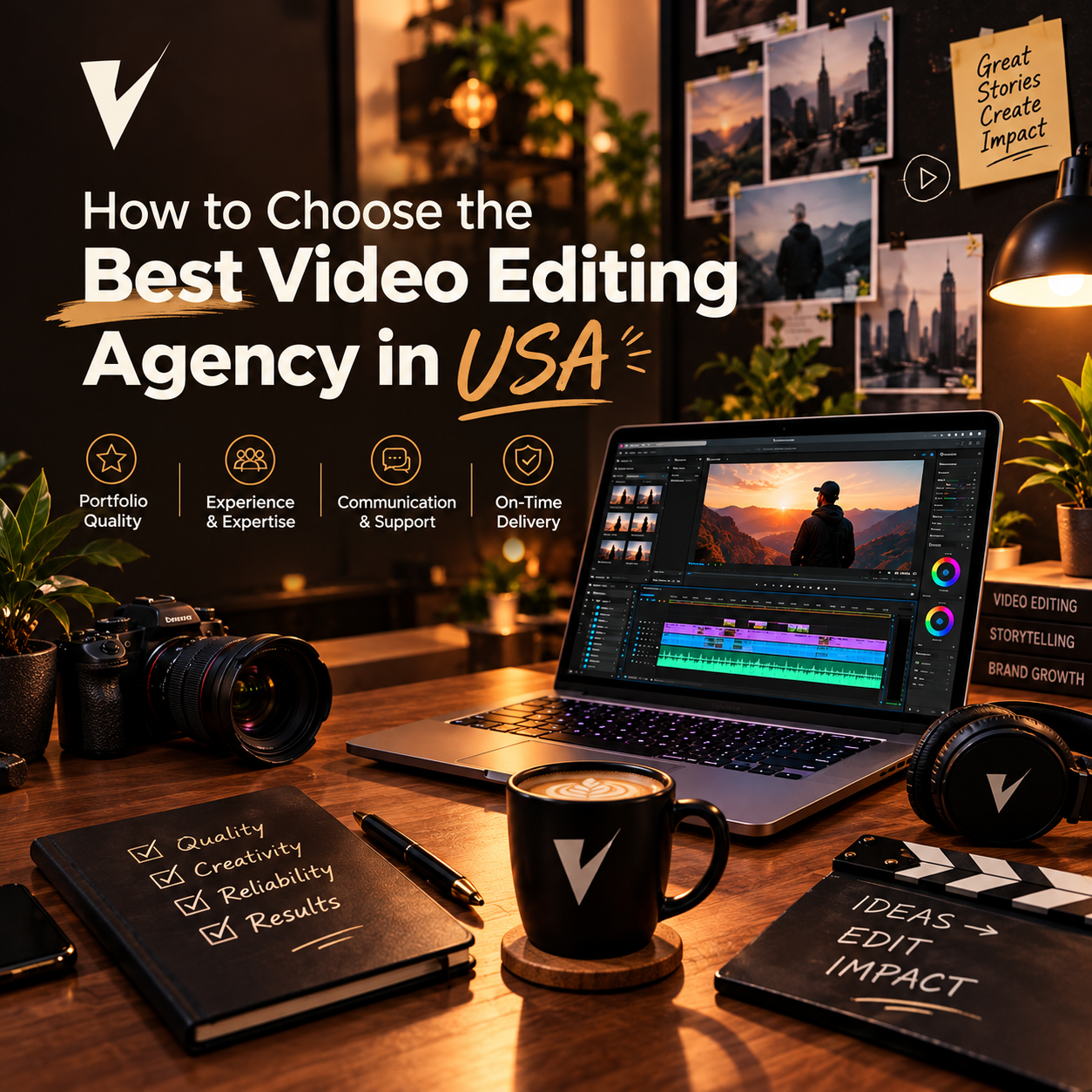
Check their portfolio, turnaround times, communication, pricing transparency, and client reviews. Our guide on how to choose the best video editing agency in USA covers this step by step.
See Our Work: Vidix Portfolio
Seeing real results is the best way to judge an editing partner. Explore the portfolio at vidix studio to view samples of social media edits, YouTube content, promo videos, and brand films created for clients across different industries. Pay attention to storytelling, pacing, audio quality, and consistency, since these are the signs of a team that can handle your project.
Tips for Getting the Best Results from an Outsourced Editor
- Share a clear brief: Include your goal, target audience, video length, and tone.
- Provide reference videos: Examples of styles you like save time and reduce revisions.
- Organize your files: Label footage, music, logos, and scripts so nothing gets lost.
- Give consolidated feedback: Send all revision notes together instead of in pieces.
- Start with a small project: A trial video helps you test quality and communication before committing to a long-term plan.
Final Thoughts
Outsourcing video editing saves money, speeds up production, and gives you access to expert skills without the burden of hiring and managing a team. Whether you post weekly on social media or run large campaigns, the right partner keeps your content consistent, professional, and ready to perform.
Ready to upgrade your video content? Get in touch with the team at Vidix Studios today for a custom quote tailored to your project and budget.